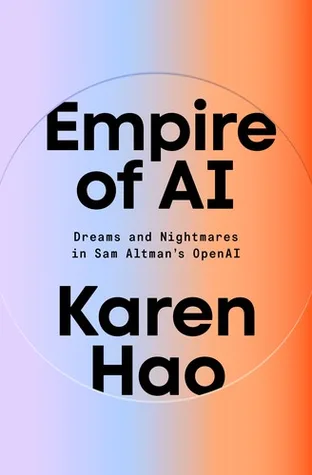
Empire of AI: Dreams and Nightmares in Sam Altman's OpenAI
Decide its fate
The five-day coup that fired and reinstated Sam Altman is only the hinge. The reporting that matters happens far from the boardroom: Kenyan labeling shops, Chilean water fights, the underpaid labor that keeps the machines fed. "I really loved the focus Hao had on the regular life stories of some of these people from Kenya and Venezuela," one reader writes, and that ground-level attention earns the thesis: "the AI boom mirrors colonial empires in their extraction of data and natural resources." "She is neither a cheerleader nor an opponent but instead offers a genuinely thorough investigation," an admirer adds, and the fairness cuts deeper than any hit job could: "there is enough in this book to make even the biggest fan of the tech bros feel decidedly uneasy."
Four hundred ninety-six pages, and one detractor's tally: "Roughly two-thirds of the book is what I can only describe as grievance-filled nonsense." The trouble is the sorting: every actor arrives pre-labeled oppressor or oppressed, so the reporting that even hostile readers credit as well documented gets buried under prose that "reads like something lifted from a student op-ed in a college paper titled The Daily Marxist." Even a reader who shares Hao's suspicion of the industry balks: "framing OpenAI as moustache-twirling evil imperialists is too far for me." The chapter on Altman's sister lands as a step past criticism into intrusion: "She could still have made her point about Altman without dragging the family issues into this saga."