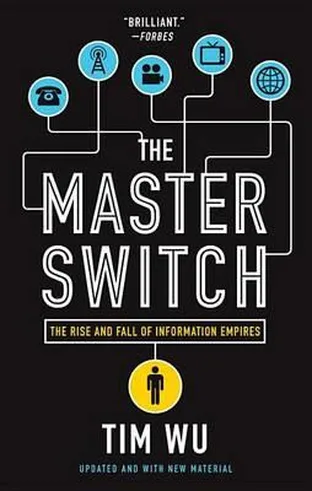
The Master Switch: The Rise and Fall of Information Empires
Decide its fate
When cable television first threatened the broadcasters, the FCC compared the upstart medium to "a farmer dismayed by a tractor's lack of horses." Wu's history runs on details like that: FM radio shelved for years because it endangered AM profits, and behind every case the same shape, each young medium traveling "from somebody's hobby to somebody's industry" before an empire closes the door. Once you see the shape the news keeps confirming it; a reader returning years later points to "the now approved merger of AT&T and Time-Warner" as the book's warning arriving on schedule. And for 384 pages of licensing fights and merger law it moves: "The writing is brisk, intelligent, and challenging."
The trouble starts when Wu reaches the present and picks sides. "Google is good and Apple is bad appears a preconceived bias," an industry veteran objects, and once the verdict looks preordained the history reads as chosen to fit: another reviewer finds the "presentation of a capital-c Cycle to be a little strained," every medium hammered into the same open-then-closed arc whether its facts cooperate or not. Then the prescription. The Separation Principle assumes customers and content are things a law can wall apart, but on today's platforms the users themselves "are now the inputs," so the rushed final chapter defends a category that no longer exists. One critic files the book under "glass half-empty philosophy": any company that simply wins its market becomes a crisis for Washington to fix.