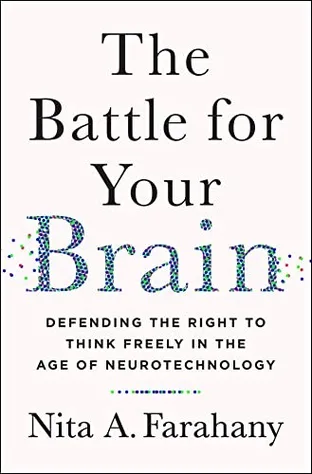
The Battle for Your Brain: Defending the Right to Think Freely in the Age of Neurotechnology
Decide its fate
One in five Americans already wears a device that samples brain activity, and no constitution protects what it collects. Farahany argues from inside that fact (she wears an EEG headband herself, for her migraines) and builds on cases that already run: a South Korean device that flags early cognitive impairment, Chinese grid workers monitored for fatigue on shift. "It is the new 1984. But non-fiction," one reader writes. Another, a business leader who rethought biometric tracking for his company's pilots after reading, calls it "a first clarion call for the right to cognitive liberty," and that named right is what separates the book from ordinary tech anxiety: it demands a law, not a mood. A critic adds: "we need more guides like her to think through the challenges ahead."
Halfway through, the alarm shuts off. The first half documents employers and marketers already mining workers' brain data; the second hands the fix to the market that produced those abuses (consent forms, self-regulation, third-party audits, trust). One reader writes that "the second half of the book is unbelievably shallow and short-sighted," and a detractor jabs at her faith that information will sort itself out: "Sure, let's open the floodgates and I'm sure people will learn how to swim." The villains get outsourced too. Pages after the CIA's mind-manipulation history, "she pictured China and Russia and believe it or not Cuba as the villains who wanna manipulate our brains." What holds it together is not much: "It feels more like a series of blog posts than a cohesive, well-argued book."