Nexus: A Brief History of Information Networks from the Stone Age to AI
Decide its fate
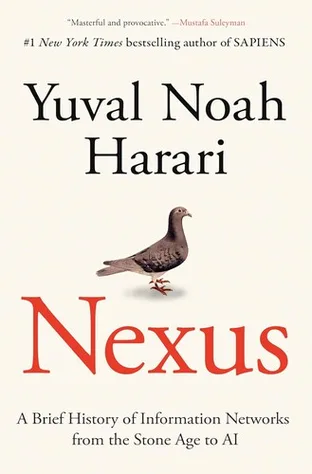
Start with the witch-hunt chapter: a continent coordinated by information that was false from end to end, the case study one reader calls "particularly chilling (pun absolutely intended)." The engine underneath is the claim that "errors, lies, fantasies, and fictions are information, too": a network survives by coordinating people, not by being right, which is how the Bible's canonization and Stalin's bureaucracy end up explained by one mechanism. Run it forward into the AI chapters and you get a future of "financiers that never forget and despots that never die" unless self-correction gets built in before the network is handed power. A reader who arrived suspicious of AI doom-saying came away persuaded: "AI cannot be left to startups and billionaires, but must be regulated."
Thirteen years after Sapiens, the trick is showing its gears. "Almost identical to Sapiens in content," one reviewer reports. Stretch it over 528 pages and you get a book a longtime fan found "all over the place, with many platitudes," months into the audiobook and questioning whether to finish. And the AI chapters, the payoff the whole book marches toward, are the weakest part: "more muddled still when he takes up the question of artificial intelligence," one critic writes, a historian forecasting a technology he cannot get specific about, no implementation, no costs, no workable regulatory plan, just the word alien doing the arguing. The fan's last word: "How the mighty have fallen."