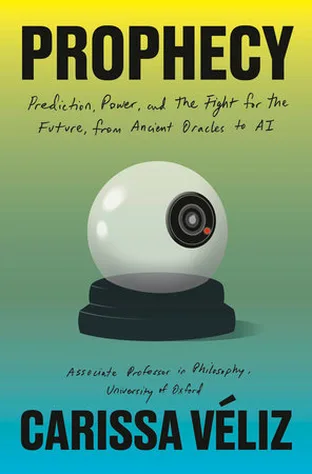
Prophecy: Prediction, Power, and the Fight for the Future, from Ancient Oracles to AI
Decide its fate
A prophecy names Macrinus as the next emperor; Macrinus has Caracalla murdered and becomes exactly that. "The prediction does not simply foresee the future; it intervenes in it," one reader writes, and Véliz follows that mechanism from Delphi through Edward Lloyd's coffeehouse, where sailors' shipping talk grew into the modern insurance industry, to the software that now prices your loan and screens your resume. Admirers keep returning to her chatbot verdict: "large language models aren't oracles; they're optimized bullshitters engineered for plausibility and engagement, not veracity." Thirteen years inside the insurance industry taught one reviewer how reliably trend-based forecasts break, which is why the closing argument for an unpredicted life lands hardest for her: "May our lives stay illegible enough to the people trying to monetise them."
Prediction is power, not knowledge: the thesis lands early, then it "circles the block, waves from the corner, and appears at the kitchen door with a casserole" through effective altruism, publishing, China, comedy. The method never changes: state the claim, then stack up historical instances of it, counting every failed forecast while skipping the places where prediction actually improved, medicine and weather among them. "Anecdotes are not data, and a book full of anecdotes has little to say about data," one detractor writes. A reader who came for the AI in the subtitle reports it "covers too many topics without addressing AI directly," and the AI material it does include read as dated within months of publication. "Would have liked it shorter and more information dense," another concludes.