Life of M
Decide its fate
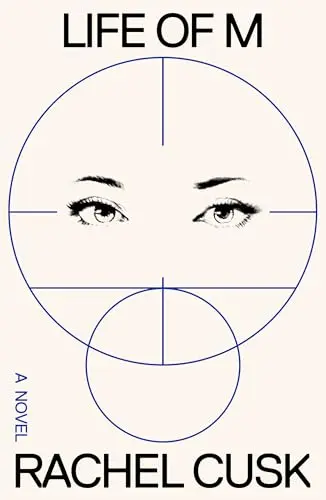
Book Marks logged five raves and six positives out of twenty-one. Alexandra Jacobs in the New York Times Book Review calls Cusk “one of the cleverest and foremost practitioners of autofiction,” which is the point: she bent that form into a shape of her own and now turns it on somebody else’s life. Joan Frank in the Boston Globe credits passages that “meditate purely, often brilliantly, upon consciousness itself” and descriptions earning “a category of their own, for their brutally incisive insights,” before ending where a lot of skeptics end: “like so many others, I will never not want to discover what Cusk is doing.” Even Kirkus, filing a mixed verdict, grants that the “spare, deliberately flat prose is as sharp as ever.”
Five mixed reviews and five outright pans sit on the same page. Becca Rothfeld in the New Yorker delivers the hardest: “Despite her reputation for rigor, Life of M is not a disciplined dismantling; it is discombobulated and haphazard, a machine breaking down at random.” She finds the three voices never satisfactorily integrated, and the flatness she once diagnosed in the Outline trilogy, a world recast in the image of “a particular kind of person: humorless, cosmopolitan, self-important,” now presses through with “even less of a filter between the characters’ perspectives and that of the book.” Kirkus, whose verdict is “accomplished but airless,” says it “lacks the connection to a wide range of human experience that distinguishes her best work.”