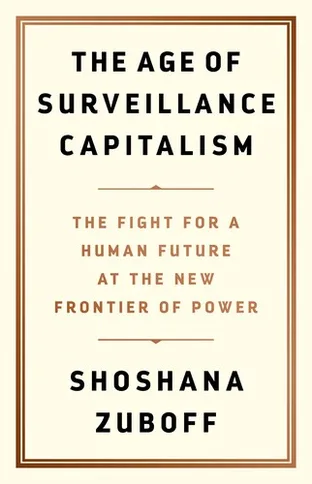
The Age of Surveillance Capitalism: The Fight for a Human Future at the New Frontier of Power
Decide its fate
What do you call power that never points a gun, only tunes what you see until you behave? One reader credits the book's answer, "instrumentarian power," with handing them a category they lacked for what the platforms are actually doing. The receipts run patent-file deep: a News Feed algorithm weighing "100,000 elements" per user, data quietly drawn from 469 outside apps and sites, a figure that sent one reader straight to his own privacy settings. Admirers shelve it with a "mix of Neil Postman, Marshall McLuhan, and Huxley" rather than with the tech exposés, since the argument stands on Polanyi and Arendt instead of outrage. Readers report changing how they use Google and their smart speakers before finishing. "Awareness is the first line of defense."
Seven hundred and four pages, and critical readers keep finding a 250-page book buried inside, "twice as long as it needs to be," whole chapters restating points settled a hundred pages earlier. The sentences are their own obstacle: overwrought, metaphor-swollen, and one reader wanted plainer evidence and fewer totalitarianism analogies in place of "invented jargon and theoretical concepts." The conquest rhetoric grates worst on people who share her worry: "Rivers of blood are not, in fact, flowing," one objects, because casting ordinary data-sharing as conquest cheapens the history the metaphor borrows. She never weighs what users get back (free search, free navigation, free communication), so when the ending waves vaguely at more democratic oversight it reads as a "lazy way to conclude the book": 700 pages of alarm, no mechanism.