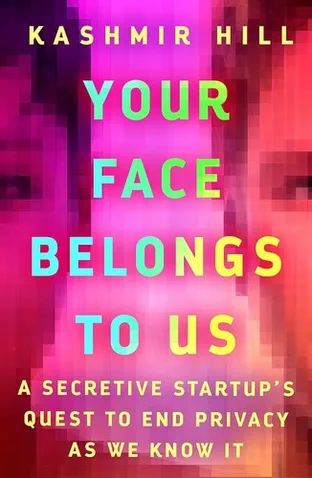
Your Face Belongs to Us: A Tale of AI, a Secretive Startup, and the End of Privacy
Decide its fate
"It starts out like a spine chilling mystery that just becomes more and more disturbing," one reader says, and the machine at the center justifies the dread: a single uploaded photo returns a name, an address, a circle of friends, and by the time anyone noticed, "the company had hired a fancy lawyer to reassure officers that they weren't committing a crime." The history chapters give the startup a lineage, running from Bentham's panopticon through "the dark days of Francis Galton and Cesare Lombroso and their disturbing and depressingly popular ideas around eugenics," so Clearview reads less like a rogue outfit than an old idea that finally found its database. The line readers keep repeating comes from the CEO himself: "your face does not belong to you."
Nearly every expert Hill sources is a privacy advocate or a critic of the police, while the arrests Clearview actually helped make get a passing mention with a caveat attached, which is why one detractor calls the book "opinion masked as reporting" and another has the fix ready: "Remove the politics and it's a great story." Except the story wobbles too. Alternating chapters between the company timeline and two centuries of biometrics history means, per one reviewer, "instead of presenting the bigger picture, Hill offers examples of what is currently happening, jumping from one topic to another." You get no working sense of the neural network underneath, no philosophy of how much anonymity you are owed, and (thanks to the pandemic) no Russia and no China. "Hill can write but she can't tell a story."