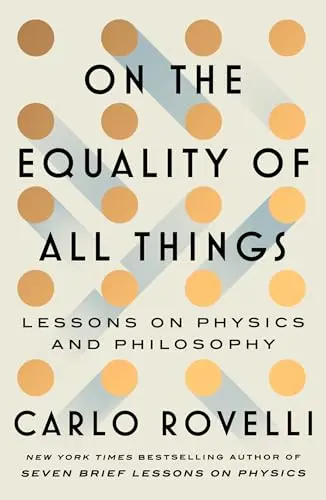
On the Equality of All Things: Lessons on Physics and Philosophy
Decide its fate
He has done this before and it worked. Seven Brief Lessons sold in the millions on the strength of physics that respected the reader, and Reality Is Not What It Seems ran the quantum-gravity argument from Anaximander forward without condescending once. This time the frame is Chinese rather than Greek, which is the interesting move: a working physicist reaching for the Zhuangzi rather than the pre-Socratics to say what his own field has been circling. At 192 pages it is short enough to read twice inside a term, which is the only way to find out whether the physics earns the philosophy or is decorated by it.
Nobody has read it yet. It publishes on 15 September and this entry was written a fortnight before, so anything here about how it lands is a guess dressed as an argument, and you should treat it that way. The standing objection to Rovelli is that the lyricism outruns the physics: readers of The Order of Time regularly report finishing it moved and unable to state what was argued. A book that dissolves the gap between minds and electrons in 192 pages is exactly where that risk lives. The Zhuangzi framing carries its own hazard, since a physicist borrowing a Daoist text can illuminate both or flatter neither.