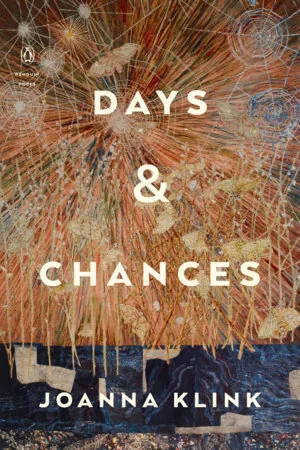
Days & Chances
Decide its fate
Publishers Weekly, 10 September 2026, said the book “applies a fluid and delicate touch to the imminent loss of the poet's father,” and quoted: “Is this/ what it means to grow old, to watch/ a bird in March and track, from memory,/ rocks and gulls, heat from the sea, mint/ in a garden I would have liked to grow.” PW closed on “This gorgeously textured volume is one of Klink's finest yet.” L. Lois at Compulsive Reader, a small online site, wrote on 25 July that the book “explores the agonies of grief, even as the poet explains the calm comfort of recently-found love,” and called it “a daughter's tribute to her father.” It quoted: “After a year of unrelenting deaths, / it is clearer now: how close we are / at any moment to ending, to grief.” Louise Glück, on Klink's work generally: “The extraordinary beauty of [Klink's] poems, from the beginning, has resulted from a constantly refined attention to the ordinary and the daily.” Cyrus Cassells, blurbing this book rather than her career: “Days & Chances is a consistently exquisite book by an entrancing and masterly poet.” That is the entire record as of 12 September, three days before publication.
L. Lois at Compulsive Reader, 25 July 2026, named the risk: “when blindness strikes, after a beloved has already survived so much, Klink's poems veer close to the white-flag self-pity of prolonged suffering.” The reviewer waved it through (“if there is a tendency towards sentimentalism, the reader quickly forgives”), which is a lower bar than a permanent seat on a shelf of one thousand. The record is thin: one trade review from Publishers Weekly, unstarred on PW's own page whatever the publisher's site claims, and one review on a small site. Literary Hub's September column listed the title without discussing it. The Louise Glück and Terrance Hayes blurbs praise Klink's earlier work and are reprinted under a new title. PW's “one of Klink's finest yet” compares the book with her own five earlier collections, a different test from a seat among one thousand books by anyone. Ninety-six pages on one father's decline and one midlife love would take a seat on a shelf of one thousand from a novel or a history five times the length.