Etna
Decide its fate
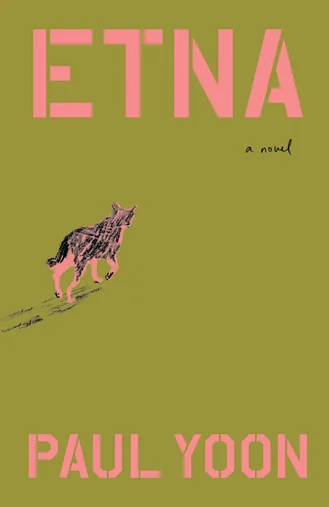
Fiona Maazel confessed in the New York Times that “by the close of Part 1” she “was weeping freely,” and called the book “devastating and gorgeous.” Maureen Corrigan on NPR put it “in a category of its own,” one that holds “‘profound,’ and ‘uncanny,’” and located the power in the voice itself, “simple declarative sentences wedded to a fatalistic canine outlook,” quoting the line that does the novel's work: “Everyone screamed the same when they got wounded. I learned that.” Rachel Vorona Cote in the Atlantic saw that “for all its compactness, Etna has the shape of an epic,” and that “its atrocities never overwhelm its faith in creaturely communion.” Publishers Weekly, which had already read it in May, found “a fresh take on well-worn Homeric themes” and ended flatly: “The author has outdone himself.”
Kirkus was the one review in ten that would not rave, and its objection is the obvious one: the book “doesn't fully avoid the sentimental traps of having a canine narrator.” A dog cannot be blamed, so a dog at war is grief with the argument removed, and 208 pages is long enough for the reader to notice the trick. The Odyssey is doing a second job underneath, the wandering hero and the strangers who help him, which Publishers Weekly hears alongside “bloodthirsty survivors who evoke those in Cormac McCarthy's The Road,” two large shadows for a slim book to stand in. The Atlantic admits it is “at times, a wrenching novel, strewn with broken bodies,” and even Corrigan, raving, ends on a hedge: the novel's one line about how everyone screams the same is “as much of a message as this extraordinary novel offers. Maybe it's enough of one.”