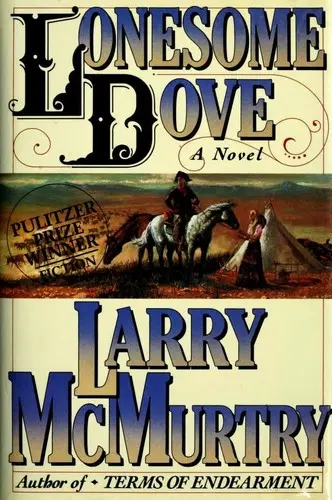
Lonesome Dove
Decide its fate
The record
Time
An eveningA season945 pages, about 19 hours: the length of 3.0 typical books on the shelf.
Getting in
Walk right inSteep climbOne reader reports nearly quitting just short of page 200.
What it gives
Plot and actionIdeas to live byIn 11 reviews from critics and book blogs, 3 credit the plot and 6 credit the ideas or a change in how they live.
One of a kind
Others do thisNothing else doesA blog pairs it with Blood Meridian, on the shelf at 353 pages, as fellow 1985 anti-Western novels, and with Steinbeck’s East of Eden.
The case for it
on the length
“It is well worth taking in the 945 pages”
a book blog on the supporting cast
“from the tragically unlucky sheriff July Johnson to the wise, enigmatic Mexican cook Po Campo”
a book blog on the characters and suspense
“without forfeiting a grain of the characters’ sympathetic power or of the book’s considerable suspense”
Unsigned review · Kirkus Reviews, 1985 on the cattle drive
“Once the Cattle Drive starts in Part 2, every single page is magically captivating”
five stars · a book blog
The case against
on the story’s coherence
“the story never quite came together for me as a coherent whole”
a book blog on the pace
“It takes them a good 150 pages just to get started on the cattle drive”
a book blog on the Native characters
“There are troubling scenes with Native American tribes”
five stars · a book blog on Woodrow Call
“Captain Woodrow F. Call, who is notoriously unable and unwilling to feel feelings”
Maris Kreizman · Literary Hub, 2024