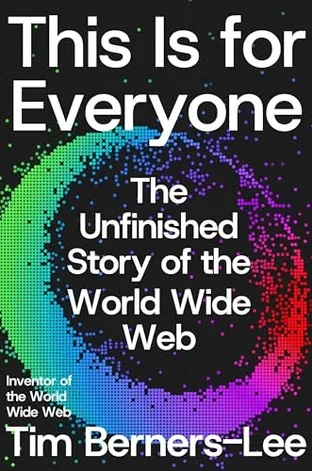
This Is for Everyone: The Unfinished Story of the World Wide Web
Decide its fate
The whole enterprise once ran on a single computer at CERN with a handwritten note taped to it, asking colleagues to please leave it switched on. The early chapters run on details like that, including "a missed-connection moment with Steve Jobs that could have changed everything," and "you don't have to be a computer geek to understand" any of it: the plumbing (HTTP, HTML) gets explained in plain English. Then the knighted MIT professor starts naming names, Google, Facebook, Microsoft, and one reader admits "I loved how left wing Tim is." Set beside a rival internet memoir written from inside Meta, a critic called this one "a cool breath of air in an overheated room": the man gave his invention away in 1993 and owes no platform anything.
Somewhere past the CERN chapters this becomes an awards banquet: lunch with Queen Elizabeth II, a U2 name-check, his own wife on record about his brilliance. One reader snaps that "nobody cares how many times you had tea with the queen"; a trade review signs off with "Canonization awaits." The timeline, meanwhile, jolts from 1990s web work to 2012 and back, unannounced. And the rescue on offer, the Solid data pod, is nearly a decade old with nothing to show: "It feels DOA," reading more like a pitch for a project its author is invested in than a fix. The sharpest critic goes further, arguing the web's capture was never a betrayal of the original design at all: "The corruption was there from the start, latent in its design."