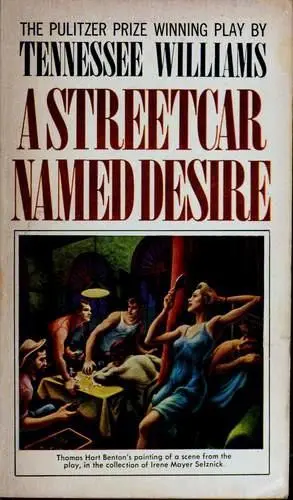
A Streetcar Named Desire
Blanche DuBois arrives in New Orleans clinging to Southern gentility and collides with her brother-in-law Stanley Kowalski's brutal realism. Williams wrote the great American play about self-deception, desire, and cruelty. Marlon Brando's Stanley in the original production changed acting forever.
Taken in cold, without a staging to picture, several readers say the pressure the play depends on simply doesn't build, calling the text flat or unmemorable compared to what a live production delivers. Stanley draws the sharpest split: some find him a bully with no redeeming shading, one writing plainly, “I couldn't abide Stanley. He's a brute and a bully,” which flattens the conflict into cruelty rather than tragedy for them. Others argue the sexual politics have aged badly rather than merely reflecting their period, and one reviewer calls it “a morbid play, which in my opinion didn't age well.” A high-profile modernized Broadway revival drew its own backlash, with one critic blaming “thrash-metal sound cues, modern appliances and overdone erotics” for burying Williams's text under directorial excess and stretching the runtime past three and a half hours.
The case for it and the rest of the canon open with Pro.