The Armies of the Night
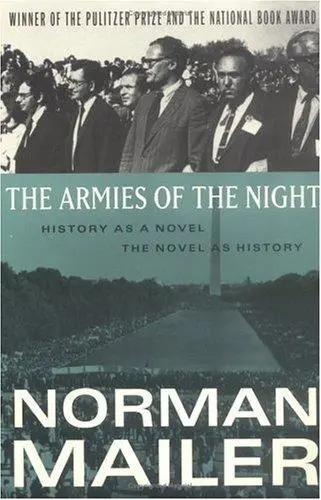
Mailer invented a form: nonfiction written in third person about the author as historical participant. The March on the Pentagon as essay, self-aggrandizement as method. Won the Pulitzer Prize. Made literary journalism a serious form.
Two hundred fifty-plus pages amount to Mailer discussing Mailer, and one reviewer states the complaint as bluntly as it gets: “Two hundred and fifty pages of Mailer on Mailer.” Another goes further: “This book made me hate Norman Mailer.” The dense 1967 name-dropping, Robert Lowell, Paul Goodman, the Old Left splitting from the New, is a real barrier if you weren’t there or haven’t studied the period. Several readers say only the shorter documentary section still matters historically, with one stating, “The fiction is fleeting and not amusing enough to carry the reader,” about the long personal-memoir Book One. Another reader isolates exactly where the good material runs out: “The most enjoyable part of this book is the first 50pgs.” Mailer’s framing of manhood and sex, and his own history of violence toward a wife, sour the self-mythologizing for readers who might otherwise forgive the ego.
The case for it and the rest of the canon open with Pro.