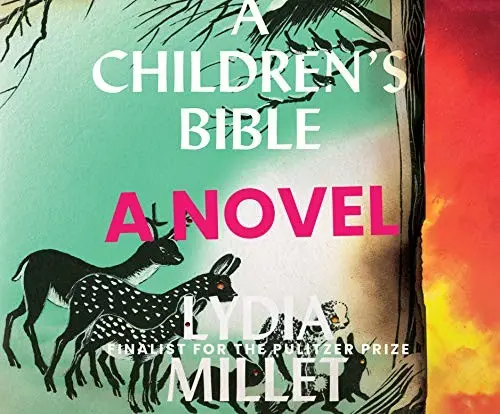
A Children's Bible
Children at a summer house watch the adult world fail and try to survive without it. Millet's climate novel uses biblical allegory with such lightness of touch that you barely notice you're reading about civilizational collapse until you already are.
Every parent in A Children's Bible is a drunk, a lecher, or checked out, while every child is resourceful and wise, and readers reject the binary as too clean: one says flatly “there wasn't a true moment or true character for me.” The Genesis and Ark parallels that fans trace with pleasure read to others as heavy-handed, hitting the same generational-blame note book after book, dismissed by one reader as “drivel about Noah's Ark.” Eve's flat, detached narration draws real resistance too, keeping at least one reader at arm's length from the whole premise before it even got going. And more than one review agrees “the ambition of it far exceeds the execution,” a verdict a Kirkus review echoes by noting the novel “takes some time to find its footing.”
The case for it and the rest of the canon open with Pro.