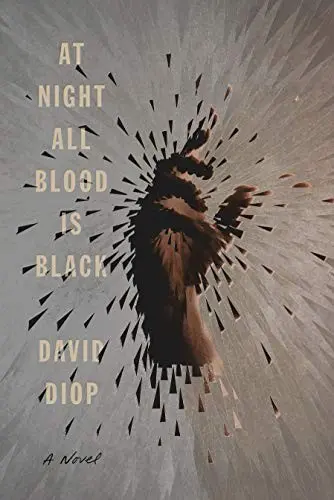
At Night All Blood Is Black
A Senegalese soldier in WWI becomes a terrifying killer after his friend's death. Diop's short, brutal novel rewrites the history of the Great War from the perspective of the African soldiers who were used and forgotten: the largest underrepresented story of that conflict.
"God's truth" opens the narrator's sentences dozens of times across a book under 150 pages, and reaction to the refrain splits hard. One reader says it “drove me to the brink of madness with it's repetitiveness”, and another describes the prose itself as “repetitious, organic, burdening”, adding that it “made it frustrating to read after a while”. The trench-as-body imagery draws pointed objection too. A reader singles out the “comparisons with the female sex, felt ridiculous”, arguing the metaphor lands as gratuitous rather than earned. A few readers also find the village flashbacks a slower detour from the frontline chapters, breaking momentum, and the closing stretch, which pivots into a folkloric register, reads to several as a rushed note after the intensity that came before.
The case for it and the rest of the canon open with Pro.