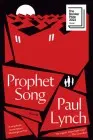
Prophet Song
Ireland slides toward fascism in the near future as a mother tries to hold her family together. Lynch writes in long, breathless, unpunctuated sentences that create a state of sustained dread. A formal achievement as significant as its subject, and the most urgent political novel of the decade.
The missing paragraph breaks and quotation marks strike detractors as a formatting gimmick rather than an earned difficulty, and more than one reviewer says the syntax inversions “blur every single scene” to the point they could not picture what was happening. Eilish herself draws frustration: a trained scientist who keeps making choices that read as naive. Critics also flag the heavier charge, that the regime and its rebels are handed no real ideology, so the atrocities read as “purloining or borrowing suffering by proxy,” generic misery grafted onto Ireland from conflicts the book never actually engages. One reader dismisses the whole style as a “hammer to crack a nut” that simply “won for audacity.” Even sympathetic readers note the final stretch compresses and rushes after a slow-burn three-quarters, leaving little room to sit with where Eilish ends up.
The case for it and the rest of the canon open with Pro.