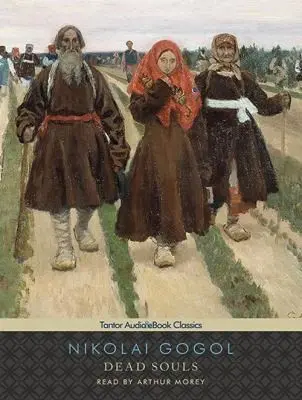
Dead Souls
A swindler travels rural Russia buying "dead souls" (deceased serfs still listed in census rolls). Gogol's 1842 novel is simultaneously absurdist comedy and the darkest vision of Russian bureaucracy and provincial life. Nabokov called Gogol "the greatest prose magician of Russian literature."
Gogol died with the trilogy unwritten, part two surviving as fragments, so the book stops where his drafts do and "the first draft of a novel" is what several readers feel they are holding. The satire also curdles into sermon: "elegies to highways and the weather," long moralizing on the Russian character that the story cannot carry. Pages go to "characters who are peripheral and fleeting in the narrative," and Gogol "goes on and on about the physical environments." The names defeat people, patronymics repeating across a cast of near-identical landowners. And one reader flags a late backstory dumped as "almost written in one extremely large paragraph."
The case for it and the rest of the canon open with Pro.