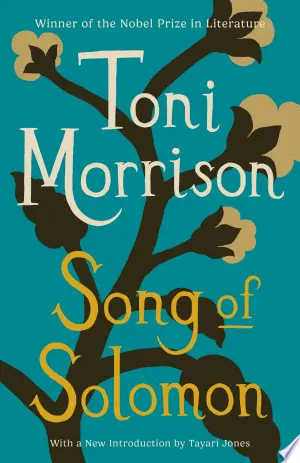
Song of Solomon
A man discovers that his family carries a secret: a literal ability to fly. Morrison's richest novel in terms of myth, music, and the Black American oral tradition becomes a meditation on inheritance, masculinity, and the memory of slavery. Won the National Book Critics Circle Award in 1977. Morrison at her most mythic.
Past the midpoint it is still unclear what story is being told, and the middle sags: "dragged along at a snail's pace," with the strong final third arriving too late for readers who quit at the halfway mark. The symbolism goes over heads without help, and Pilate's missing navel is the detail readers name as baffling rather than illuminating. Characters make choices that feel unmotivated, their "actions seemed hollow and arbitrary," and one reader files the whole book as "dense, odd and meandering," "reaching for 'clever' as opposed to engaging." Another objection lands structurally: myth, family saga, and social history at once, a book that "tried too hard to be everything."
The case for it and the rest of the canon open with Pro.