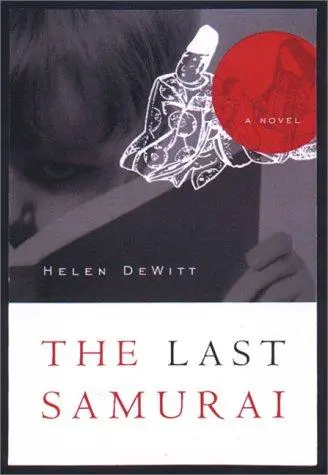
The Last Samurai
A single mother teaches her prodigy son ancient Greek, Japanese, and Inuit while they watch Kurosawa's Seven Samurai on repeat in an unheated London flat. DeWitt published it in 2000 and it became a cult classic almost immediately. The novel is about genius, motherhood, and the search for a father, written in a polylingual, typographically inventive style that no one has successfully imitated.
Readers stall between pages 150 and 200, one naming 196, worn down by aerodynamics, linguistics and music theory arriving faster than any story does. The digressions “felt too much like a Wikipedia rabbit-hole,” and the experience for one critic is “sitting next to a brilliant crank.” The prose draws separate fire, clipped declaratives and repeated dialogue tags reading as if “sent via telegram to the reader,” with formal experiments one reader calls “juvenile and obnoxious.” The second half, where eleven-year-old Ludo works through candidate fathers one at a time, thins out across 544 pages. It is also “the type of book that wants to entrench itself against criticism.”
The case for it and the rest of the canon open with Pro.