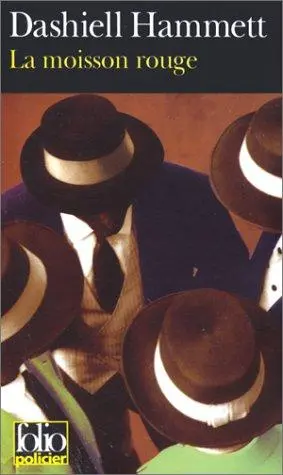
Red Harvest
Decide its fate
The record
Time
An eveningA season224 pages, about 4 hours: two-thirds the length of a typical book on the shelf.
Getting in
Walk right inSteep climbThe Continental Op arrives in the mining town of Personville at a newspaper publisher’s request and stays to break the gangs running it.
What it gives
Plot and actionIdeas to live byIn 12 reviews from critics and book blogs, 8 credit the plot and 4 credit the ideas or a change in how they live.
One of a kind
Others do thisNothing else doesOne book blog calls it a rough draft of a Chandler novel, and another finds it more violent than Chandler’s books.
The case for it
on the dialogue
“It is doubtful if even Ernest Hemingway has ever written more effective dialogue than may be found within the pages of this extraordinary tale of gunmen, gin and gangsters. The author displays a style of amazing clarity and compactness, devoid of literary frills and furbelows, and his characters, who race through the story with the rapidity and destructiveness of machine guns, speak the crisp, hard-boiled language of the underworld.”
Herbert Asbury · The Bookman, March 1929 on the minor characters
“strut and fret their few lines across the page”
a book blog on chapter twenty
“chapter 20 is probably one of the most important chapters in American fiction”
three stars · a book blog on the plot
“a maze of crime and violence with no exits”
a book blog
The case against
on the tone
“There isn’t a moment of kindness, sorrow, regret, or affection in this novel”
a book blog on the structure
“this is not quite a novel, more a series of overlapping vignettes”
a book blog on the characterization
“it relies heavily on tags and action over characterization”
a book blog on the secondary characters
“one could be forgiven for confusing Gangster A with Gangster B, C or D”
a book blog