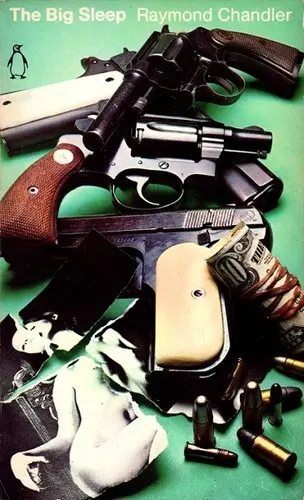
The Big Sleep
Decide its fate
The record
Time
An eveningA season229 pages, about 5 hours: three-quarters the length of a typical book on the shelf.
Getting in
Walk right inSteep climbOne reader calls the opening a bumpy trip; two others describe the whole book as fast and easy.
What it gives
Plot and actionIdeas to live byIn 15 reviews from critics and book blogs, 6 credit the plot and 4 credit the ideas or a change in how they live.
One of a kind
Others do thisNothing else doesA CrimeReads essay and two blog posts weigh it against Hammett’s The Maltese Falcon, on the shelf at 254 pages.
The case for it
on Marlowe’s moral code
“Marlowe is Prometheus: the noble outsider, sacrificing and enduring for a code he alone upholds.”
Owen Hill · Pamela Jackson, and Anthony Rizzuto, CrimeReads, 2018 on the pace
“Hard-boiled, fast paced, plenty of action, some sensationalism.”
Kirkus Reviews, 1939 on Carmen Sternwood
“Carmen is the star of the book”
a book blog on the dialogue
“his one-liners are witty, sarcastic and vivid”
a book blog
The case against
on the gay characters
“his denigrating comments make a modern reader squirm”
a book blog on Marlowe’s slaps
“Marlowe seems not to mind a little woman beating”
a book blog on a loose end
“there is a loose end that is never properly tied up”
a book blog on the plot
“I’m darned if I can tell you who’s doing what to whom”
a book blog