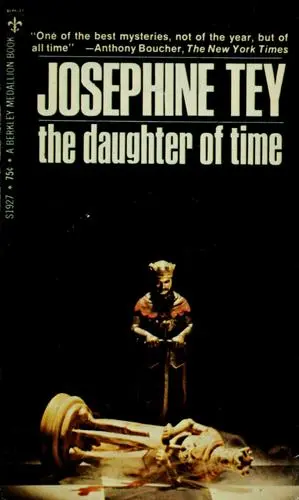
The Daughter of Time
Decide its fate
The record
Time
An eveningA season207 pages, about 4 hours: two-thirds the length of a typical book on the shelf.
Getting in
Walk right inSteep climbAlan Grant lies bored in a hospital bed until a friend brings him historical portraits.
What it gives
Plot and actionIdeas to live byIn 12 reviews from critics and book blogs, 5 credit the plot and 10 credit the ideas or a change in how they live.
One of a kind
Others do thisNothing else doesA mystery blog’s commenters raise a Colin Dexter novel with the same hospital-bed premise, which is not on the shelf.
The case for it
on the detective work
“the joy of The Daughter of Time is not the conclusion but the detective work”
a Substack review on the length
“at just over 200 pages it’s a quick read”
a book blog on the nurses
“making even the incidental characters, such as the nurses, into real people”
a book blog on the hospital staff
“Tey has a gallery of hilarious hospital staff members, and great dialogs”
a book blog
The case against
on contemporary action
“The relative lack of contemporary action may put a few readers off this book”
Anthony Boucher · The New York Times Book Review, 1952 on women’s roles
“Women are nurses or in service occupations, except for Grant’s actress friend Marta Hallard”
a book blog on the dialogue
“it took me a while to get used to the dialogue”
a book blog on the pretenders
“little said of the pretenders who came to England during Henry VII’s reign”
a Substack review