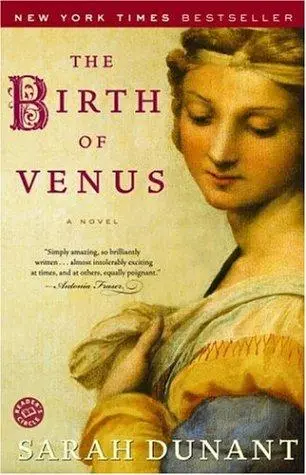
The Birth of Venus
Renaissance Florence, a young woman who loves art and falls in love with a painter. Dunant writes historical romance with the care of a scholar and the heart of a novelist. Alessandra's story is a love story, a coming-of-age, and a meditation on beauty in a world that wants to suppress it. Intelligent, sensuous, underrated.
The prologue centers on a dead nun's exhumed corpse, and multiple readers warn that it “gives away the last quarter of the book,” recommending new readers skip it or save it for after the story proper. The plot that follows strikes some as predictable, the cast reading like modern people dropped into period dress: “the characters seem as modern day caricatures,” one reviewer writes, pointing to dialogue and slang that feel anachronistic for the 1490s. The heroine's brother turns hostile without motivation the text ever earns, and the ending draws the sharpest complaints of all: reviewers across multiple sites call it “an incomplete ending and a betrayal of her character,” arguing her final choices contradict who she's been for three-quarters of the book. A slow first hundred pages tests patience before the marriage plot takes hold.
The case for it and the rest of the canon open with Pro.