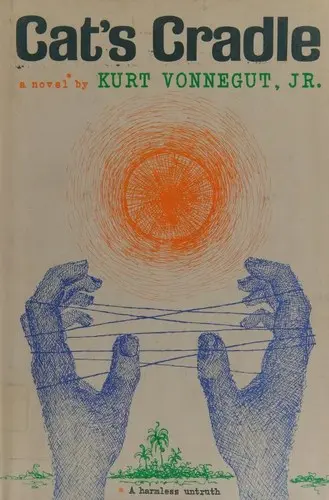
Cat's Cradle
Ice-nine, Bokononism, and the bomb. Vonnegut's darkest comedy concerns the end of the world, the comfort of lies, and the absurdity of science without conscience. His invention of Bokononism (a religion built on comforting lies called foma) ranks among fiction's great satirical achievements.
The jump-cut structure reads to detractors as “excessively disjointed and rambling,” too many minor characters and biographical digressions that never cohere. Several report total emotional disconnection, one saying flatly “I didn’t care about any of it.” The humour is for some “the humor is so dark as to be invisible,” undercutting the stakes rather than sharpening them. The “conversations and human relationships are superficial, cliche-ridden, vapid,” vehicles for ideas rather than people talking. The older narrator’s interest in an eighteen-year-old reads badly now. And comparisons to Slaughterhouse-Five run unflattering.
The case for it and the rest of the canon open with Pro.