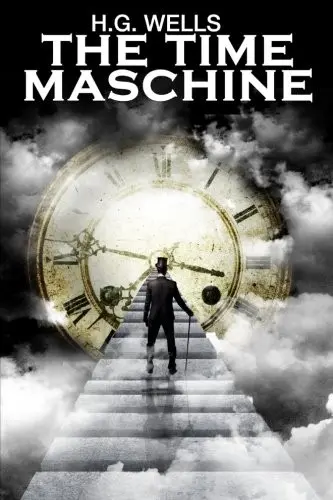
The Time Machine
The novel that invented time travel as a narrative device. Wells used the far future, 802,701 AD, to argue about class: the Eloi (leisure class) and Morlocks (workers) are capitalism's logical endpoint. Still the genre's most efficient political metaphor.
The catalogue-style descriptions of the future landscape are where momentum goes, even for readers who rate it highly, with “long drawn out sections on scientific theory and mathematical formula” called padding rather than story. A subset push back on the prose as “mechanical, clunky and overly descriptive,” one summing the book up as “a great idea done badly.” Readers pick apart the physics, noting the Earth moves through space so staying in place while jumping forward should not work. And the relationship with Weena is a recurring sticking point, “a weird and almost husband-and-wife relationship” given the imbalance.
The case for it and the rest of the canon open with Pro.