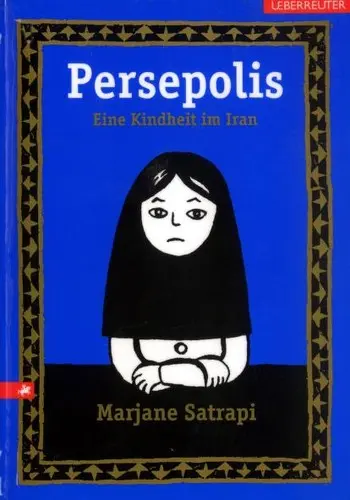
Persepolis
Satrapi's black-and-white graphic memoir of growing up in Tehran during the Islamic Revolution manages to be politically devastating and genuinely funny, often in the same panel. She was ten when the revolution hit. The simple drawing style makes the violence land harder, not softer. It was banned in Iran, challenged in American schools, and translated into dozens of languages because the story turns out to be everyone's story about losing a country.
Satrapi's own analysis of the revolution's mechanics stays vague enough that one reader calls the book “too superficial to leave any kind of lasting impression.” The family's comfortable footing sits oddly against a story sold on constant peril: one reviewer points bluntly at “her million dollar mansion while being served by one of her maids.” A sharper version of the same complaint notes that “the word AYATOLLAH is never mentioned, not once,” not in the book or the animated film, which one reader reads as strategic softness for a story specifically about an Islamic revolution, drawing an unflattering comparison to a memoir of 1930s Germany written “without mentioning Hitler or the Nazi Party.” Professional critics have found it short of the emotional depth or reportorial rigor of comparable comics journalism.
The case for it and the rest of the canon open with Pro.