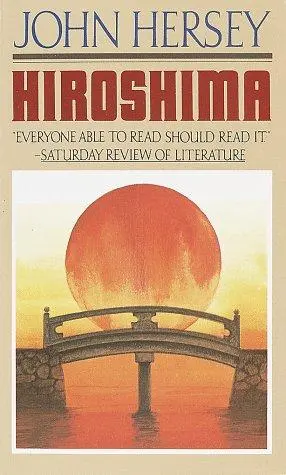
Hiroshima
Hersey returned to Hiroshima one year after the bomb and told the story through six survivors: their lives before, the moment itself, the aftermath. The entire August 31, 1946 issue of The New Yorker was given over to this single piece. No journalism before or since has matched its moral clarity or its effect on public consciousness.
The restraint that admirers love reads to others as detached, its “antiseptic” prose a “suave, toned-down, underplayed kind of naturalism” where “the prose lacks the intensity the subject deserves,” leaving readers “weighed down rather than emotionally powerful.” Some find it thin as a book, essentially the 1946 New Yorker article. The famous critical charge, Mary McCarthy's, is that it evades the politics entirely, “an insipid falsification of the truth of atomic warfare.” The cut-between structure fragments the six stories enough that readers lose track of who is who. And older reprints quietly omit that fifth chapter.
The case for it and the rest of the canon open with Pro.