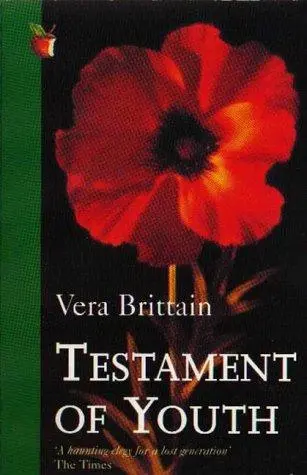
Testament of Youth
Brittain lost her fiance, her brother, and her closest friends in WWI while nursing in France. Her memoir of that catastrophe (how the war destroyed everything, the long struggle to find meaning in the wreckage) is the definitive anti-war memoir of the 20th century, and a crucial feminist document.
The postwar chapters on League of Nations work and feminist organising are the slow patch, and readers say they “go on far too long and with detail that can have little or no interest”; “the last third... too centered on politics.” The bigger complaint is tone: a narrator who “judged, judged, judged,” with “her tone of disapproving superciliousness echoed throughout all 600+ pages” until readers are weary of the effort. The heavy reliance on quoted letters, respected as method, reads as tedious as an experience. Readers coming in cold find her circle “whiny and privileged white people” before the war reframes them, and some finish calling it “an unexpected disappointment.”
The case for it and the rest of the canon open with Pro.