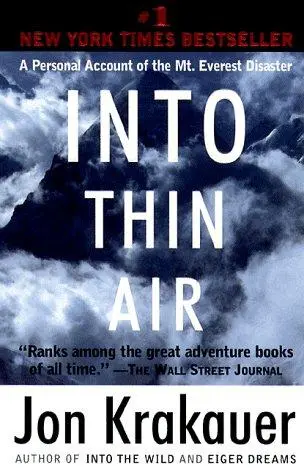
Into Thin Air
Krakauer's first-person account of the 1996 Everest disaster in which eight climbers died is the definitive extreme sports narrative and a profound meditation on hubris, risk, and the human drive toward the summit. It sold millions worldwide and transformed public understanding of high-altitude mountaineering.
Readers argue he scrutinises a rival guide's judgment in detail while barely examining his own expedition's, and some read the book as “written out of spite,” carrying “hatred, envy and derision.” A 2024 fact-check campaign disputes specific figures, its author insisting “real journalists admit their mistakes and correct them,” and readers say the thirtieth-anniversary edition did not correct all of them. He assigns private thoughts to people who died and cannot answer. The pacing shows its seams as an expanded magazine assignment, and of the added sections “many of them were superfluous to the core story.” Some found the fact-first prose a “stolid police report,” leaving them “less emotionally engaged than I should have been.”
The case for it and the rest of the canon open with Pro.