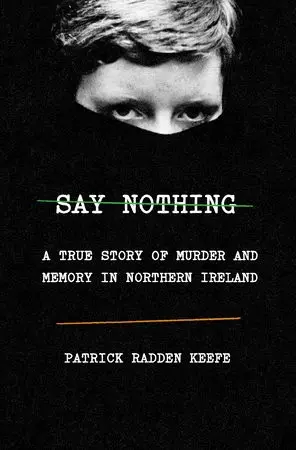
Say Nothing: A True Story of Murder and Memory in Northern Ireland
Keefe reconstructs the disappearance of Jean McConville, a Belfast mother of ten dragged from her home by the IRA in 1972, and through her story maps the whole arc of the Troubles. The reporting is devastating. The book asks who should be held accountable for a shared history of violence when everyone agreed to say nothing.
It opens as a whodunit about McConville and then “Jean is barely mentioned in the first half of the book” while the narrative settles into broad IRA history, and readers feel the premise was oversold. A new republican or loyalist figure arrives almost every chapter, “far too many characters for me to keep track of,” until one reader “found myself wanting to skim.” The structure “kept jumping between the murder and then the history,” disorienting some enough to abandon it, especially on audio. And Keefe concedes in his own afterword that the book leans republican and treats the loyalist side thinly.
The case for it and the rest of the canon open with Pro.