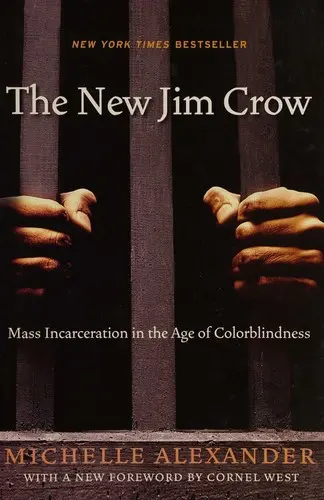
The New Jim Crow
Alexander argued that mass incarceration (the War on Drugs and its racialized enforcement) functions as a new system of racial caste control, the heir to Jim Crow. The most important and controversial book about American criminal justice in decades, it changed the national conversation and launched the prison reform movement.
Criminologist John Pfaff challenges the causal spine directly, arguing drug offenders are a modest share of the prison population and that state-level violent-crime sentencing drives most of the growth. James Forman Jr. argues it underplays how much Black community leaders themselves pushed for tougher policing in the eighties and nineties. A separate critique runs the other way, faulting Alexander's “vague and euphemistic language” for treating slavery and Jim Crow and incarceration as three systems rather than one. Even sympathetic readers report “the change in style threw me a bit” and that they “didn't agree with all of Alexander's ideas.” And the statistical core is a snapshot of a specific period.
The case for it and the rest of the canon open with Pro.