— Philosophy —
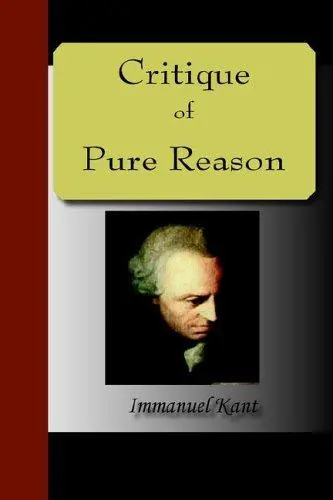
Critique of Pure Reason
Immanuel Kant
— 1781 —
“
The most important and most difficult book in modern philosophy.
Decide its fate
⚖The case for it
The Copernican move is the payoff: objects conform to our cognition rather than the reverse, and readers describe the click as permanently changing how they notice their own perceiving. “Our brains came with some pre-loaded a priori software.” The Transcendental Aesthetic, arguing space and time are forms we bring rather than things out there, is the clearest stretch. Kant closes off Hume and the rationalists in one move. The Guyer and Wood Cambridge edition is what makes a serious attempt survivable, with real endnotes and A/B cross-references. Finishing all 785 pages is “philosophical mind-fuckery ever to be writ.”
— the honest librarian
✕The case against
Kant uses “50 words where 10 would do,” and the argument disappears under its own qualifications. The invented vocabulary has to be learned like a second language before anything is legible. The Transcendental Deduction is where readers lose the thread entirely, and Kant himself rewrote it from scratch for the second edition after confusing his own circle. The Schematism is under-explained exactly where help is needed. A companion guide is functionally required, which readers experience as the book failing to stand alone. And “a bad translation is worse than useless.”
— the honest librarian
16h
honest hours
23
sittings
beyond the verdict
if you loved this, read these →