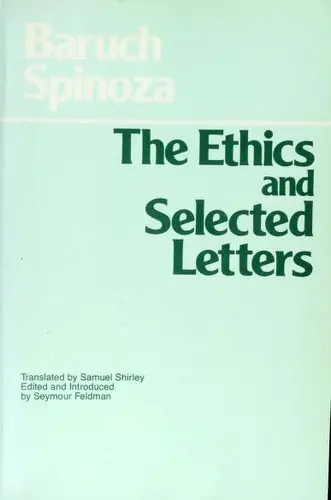
Ethics
Decide its fate
The record
Time
An eveningA season208 pages, about 4 hours: two-thirds the length of a typical book on the shelf.
Getting in
Walk right inSteep climbPart One opens with definitions and axioms about God, where one reader stalled before finishing on a later attempt.
What it gives
Plot and actionIdeas to live byIn 14 reviews from critics and book blogs, 2 credit the plot and 10 credit the ideas or a change in how they live.
One of a kind
Others do thisNothing else doesNo reviewer names a book on the shelf that works like its geometric method of axioms and demonstrations.
The case for it
on the Part Four appendix
“the Appendix to Part Four, where Spinoza summarizes his psychological results, providing simple advice”
a book blog on Human Bondage
“Once that starts to happen, it really changes you as a person.”
a book blog on Carlisle’s introduction
“Carlisle’s lengthy introduction and accompanying notes make Ethics accessible”
Diana Pringle · Existential Analysis, 2021 on the payoff
“The juice will be worth the squeeze.”
a Substack review
The case against
on the geometric method
“an extemely dense text that is both eternally fascinating and eternally difficult”
a Substack review on the prose
“elaboratively and eloquently written heap of non-sense”
a book blog on the geometric proofs
“painstakingly accumulated in the Cartesian language of axioms, propositions and demonstrations”
Alex Christofi · New Humanist, 2020 on Part Five
“It is by far the hardest and most enigmatic part of the text.”
a book blog