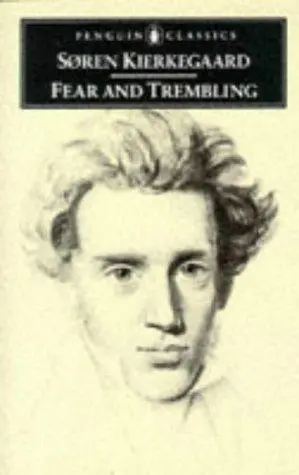
Fear and Trembling
Decide its fate
The record
Time
An eveningA season160 pages, about 3 hours: half the length of a typical book on the shelf.
Getting in
Walk right inSteep climbFour retellings of Abraham’s journey with Isaac toward Mount Moriah come first, then a speech in praise of Abraham.
What it gives
Plot and actionIdeas to live byIn 10 reviews from critics and book blogs, none credit the plot and 10 credit the ideas or a change in how they live.
One of a kind
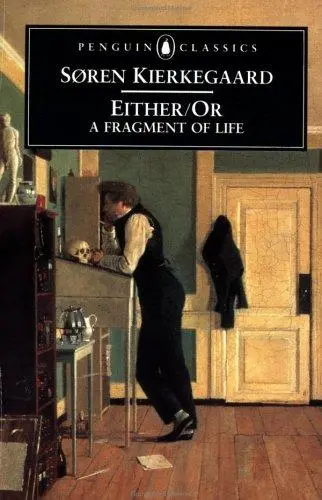
Others do thisNothing else doesA blogger calls it a continuation of Kierkegaard’s own Either/Or, on the shelf at 640 pages.
The case for it
on the paradox of faith
“this book is an excellent examination of what Kierkegaard calls ‘the paradox of faith’.”
a book blog on Abraham and Isaac
“Kierkegaard’s greatest illustration of this is his retelling of the story of Abraham and Isaac”
Julian Baggini · Aeon, 2013 on the four retellings
“they are fairly short and quite compelling as written”
a Substack review on Abraham’s faith
“his portrayal of faith, in particular Abraham’s faith, as involving love, expectancy and struggle”
a book blog
The case against
on the difficulty
“is Kierkegaard’s most difficult work to interpret.”
Michael Strawser · Notre Dame Philosophical Reviews, 2016 on Problema III
“I do think Problemata III could have been 20 pages shorter.”
a book blog on the life of faith
“could still require intentionally killing your child.”
Thomas J. Millay · The Marginalia Review of Books, 2017 on some passages
“it is a quite difficult read, some passages are incomprehensible to me.”
a book blog