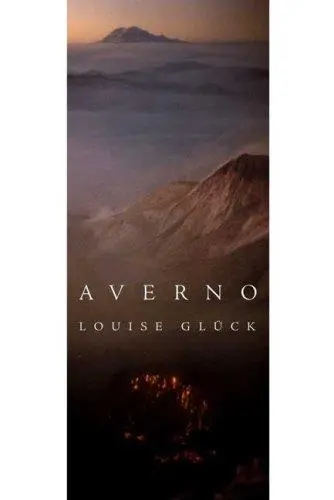
Averno
Gluck's meditations on the myth of Persephone, centered on the lake in Italy that the Romans believed was the entrance to the underworld. The poems function as an extended meditation on death, femininity, and the seduction of annihilation. Her most sustained mythological sequence and arguably her most perfectly sustained collection overall. The Nobel committee cited her work's "unmistakable poetic voice that with austere beauty makes individual existence universal."
The poems here grew noticeably longer and more fragmented than in Glück’s earlier collections, one reader complaining, “suddenly each poem is 5-8 pages,” broken into numbered sections that make the book harder to enter. Readers without prior familiarity with the Persephone/Demeter myth report losing the resonance and feeling shut out of the collection’s engine, one coining the complaint “Fed-Up Of Myth Overload.” Specific poems draw specific fire: one reviewer names Archaic Fragment, Blue Rotunda, and Fugue as pieces that miss their mark, while another singles out Prism and the title poem for clichéd imagery that “seems to miss whatever it aims to hit.” At least one longtime reader, having worked through her first eight collections, ranks this the weakest since her debut and gives blunt advice to a newcomer: “Read ‘The Wild Iris’ instead.”
The case for it and the rest of the canon open with Pro.