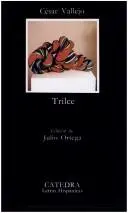
Trilce
The most radically experimental collection in Spanish-language poetry. Vallejo shattered syntax, invented neologisms, and used typography and white space with a violence that made Eliot look conservative. Written partly while he was in prison in Peru, Trilce combines abstract linguistic experiment with visceral physical suffering. Neruda said Vallejo was the greatest American poet, and the question is whether "American" meant only the continent or the hemisphere.
Some readers finish Trilce and understand it no better than when they started, the difficulty never resolving into payoff. One two-star review dismisses most of the book outright: “se salvan muy muy muy pocos poemas.” Another sums up the whole experience in one line, “Al principio no entendía nada, al final, tampoco,” confirming persistence doesn’t buy clarity here. A slower reader admits it “took me a while to finish because of how challenging” the density gets, and treats that grind as an obstacle rather than a texture worth savoring. English readers face a further hurdle before they even open the book: Eshleman, Seiferle, the Shearsman edition, and the new Rowe/Dimos translation all compete for the job of rendering Vallejo’s invented Spanish, and picking wrong risks smoothing the strangeness that’s the whole point. Even a reader who rereads it three times admits the sense of individual poems keeps slipping away.
The case for it and the rest of the canon open with Pro.