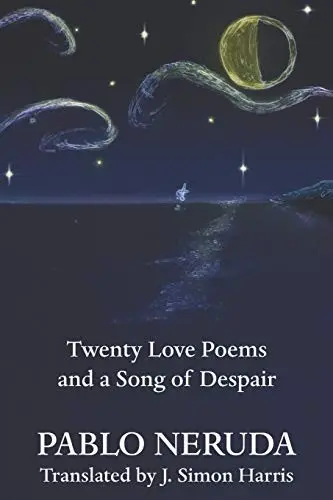
Twenty Love Poems and a Song of Despair
Written when Neruda was 19, this collection has sold more copies than virtually any other book of poetry ever published. Its erotic directness, its sensory overwhelm, its young man's pure hunger: these are qualities that make it many readers' first serious experience of poetry. "Tonight I can write the saddest lines" remains one of the most quoted poems in the world. It also represents the most accessible entry point into the Spanish-language tradition.
Since Neruda’s own memoir became widely read, some reviewers can’t set aside what he admitted about his conduct toward a housemaid in Ceylon; one two-star review states it bluntly, “He raped a defenceless housemaid that couldn’t either refuse or resist,” and marks the book down for it. A longtime fan otherwise sold on the collection still docks a star over “the ‘woman as a doll’ imagery that he seems fond of using.” Several self-described poetry skeptics report most of the twenty poems simply don’t land, one flatly stating, “The only one I liked is number XVIII.” Translation matters too: a version other than Merwin’s, readers say, actively damages the book, and the shape itself, twenty short poems followed by one long different-register piece, reads to some as a mismatched coda.
The case for it and the rest of the canon open with Pro.