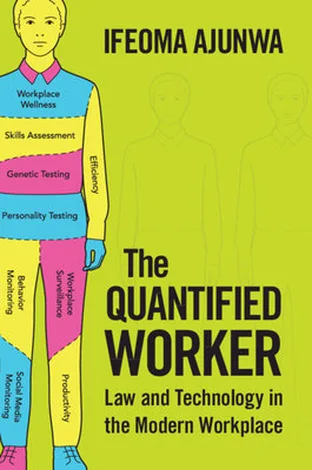
The Quantified Worker: Law and Technology in the Modern Workplace
Decide its fate
The chapters follow the order in which a worker actually meets these machines: resume screener, personality test, AI-scored video interview, then the wellness program and the wearable once you're hired. A law librarian credits exactly that design ("organized by the types of workplace programs and hiring activities familiar to workers") and adds that it "deftly distills the ways in which technologies based on AI and big data impact workers": her exhibit is chapter five, which traces the emotion-scoring software in AI video interviews straight back to phrenology. One privacy scholar calls it "the definitive book on the topic," and where similar titles stop at diagnosis, this one "makes concrete proposals for countering the drift towards workers' commodification," down to a Title VII rewrite and third-party algorithm audits.
Four hundred seventy-six pages, and one book-club reader had to ration them into short sessions, finding the "vocabulary and sentence structure to be unnecessarily complicated": the subject wasn't the barrier, the prose was. A reader who did finish reports that "chapters tend to be repetitive," the same points re-stated instead of built on, which is a real cost at this length. Ajunwa treats implanted RFID chips as categorically worse than wearables, a ranking other surveillance scholars reject on the view that "almost all AI tech is dangerous," wristband or implant alike. And anyone hoping for a wholesale case against workplace surveillance should know that "she is not critical of large-scale data collection unless it encroaches on workers' and minorities' rights."