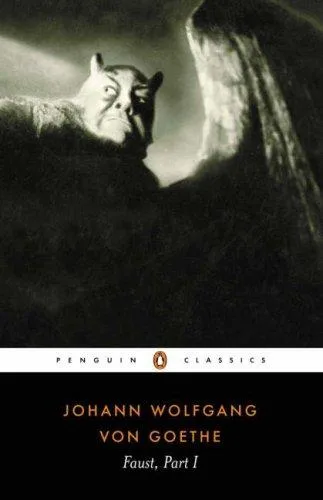
Faust
A scholar who has mastered every discipline and found them all hollow makes a wager with the Devil: endless striving against a single moment of satisfaction. Goethe worked on it for sixty years, from young man to deathbed, and poured everything he knew into it. The founding document of modern restlessness, and the reason we call certain bargains Faustian.
Part Two is where nearly every mixed or negative review breaks down: a flood of Greek and Roman mythological figures arrive and vanish within a page or two, and Gretchen's tragedy, along with Mephistopheles himself, gets crowded out by Helen of Troy, a homunculus in a flask, and the Emperor's court. One reader asked outright, “does anybody actually enjoy reading this?” and another called long stretches “a boiling pot of incomprehensible sludge.” Major turns, especially around Faust and Helen, happen off the page in summary rather than being dramatized, which reads as a structural letdown rather than a stylistic choice. A weak or overly literal translation gets blamed for killing the poetry outright, and even sympathetic readers admit some editions turn 500-plus pages of rhymed verse into a wall they can't get past. One frustrated reader put the harshest verdict on Part Two specifically: it was “as useful as an oxygen mask on a fish.”
The case for it and the rest of the canon open with Pro.