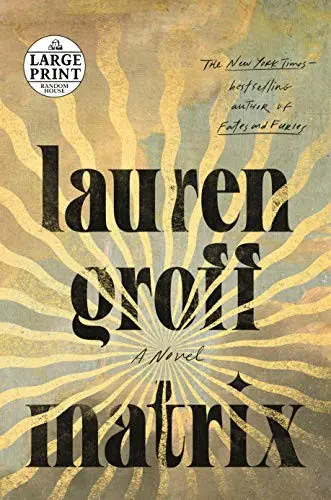
Matrix
Marie de France arrives as a teenage castoff at a crumbling nunnery and builds it into a kingdom. Groff's medieval novel is a vision of female power, mysticism, and queer desire that feels totally contemporary while being historically meticulous. The historical novel as speculative fiction.
Marie's competence in Matrix reads as near-superhuman, resolving hunger, disease, class conflict and misogyny with too little resistance, and one reader complains “Marie has a super-hero trajectory” that drains the book of real stakes. The pacing pays for it: years and conflicts settle in a handful of pages once the second half sets in. A detailed critical review argues the novel leans on Nicola Griffith's earlier Hild without full acknowledgment, calling it “unacknowledged borrowing is displeasing, and cheap.” Marie's real historical claim to fame, her poetry, gets only glancing treatment, and her mystical visions strike some readers as underwritten next to how actual medieval mystics wrote. One reader, unmoved by the misogyny Marie overcomes, says it was “not strong enough to be outraged about.”
The case for it and the rest of the canon open with Pro.