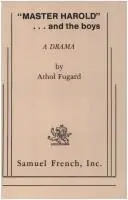
Master Harold...and the Boys
A white teenager in 1950s Port Elizabeth and the Black man who raised him share a bond that apartheid pushes to its breaking point. Fugard wrote the most personal anti-apartheid play from his own childhood shame. It takes place in a tea room over one rainy afternoon. The climax is one of the most painful moments in modern theater because the love between the characters is real.
A privileged white teenager discovers apartheid-era racism exists, and one reader dismissed the whole premise flatly as just that: “a privileged white kid learns that racism exists in South Africa.” The period slang and social context can read as foreign enough to keep the characters feeling like types instead of people; one reviewer called the read laborious and said “the language, the theme and the overall setting was so unfamiliar.” Another reader found the play bluntly moralizing, its theme heavy-handed, and suspects it plays better live than on the page. At least one viewer who saw it staged without a strong grasp of the accents found that production hard to follow, a real barrier rather than incidental texture. A few readers get through it easily enough and still call it forgettable, saying it won't stay with them.
The case for it and the rest of the canon open with Pro.