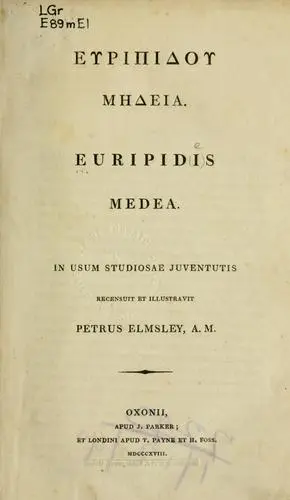
Medea
A woman betrayed by her husband murders their children to punish him. Euripides gave the barbarian sorceress a voice of terrifying rationality, and Athenian audiences didn't know what to do with it. The play still shocks. Every few years someone stages a new Medea, and the argument about whether she's a monster or a hero starts over.
The Corinth backstory assumes a reader already knows Jason and the Argonauts, and reviewers who arrive without that context say they felt lost about why Medea is stranded there at all. Some find both leads too unlikeable to root for, one admitting the pair left her “unsympathetic, which hampered my ability to empathize” with either side. Others question whether Euripides needed to push the ending as far as he does for the play to make its point, suspecting the choice was sharpened for shock as much as argument. Genre fatigue is its own complaint: readers worn down by messenger speeches and chorus interludes call the conventions stagey on the page, and at least one states flatly, “not a fan of Greek tragedies.” Grab a flat, literal translation instead of Vellacott's and the verse turns prosaic, a duller play than the one everyone else is praising.
The case for it and the rest of the canon open with Pro.