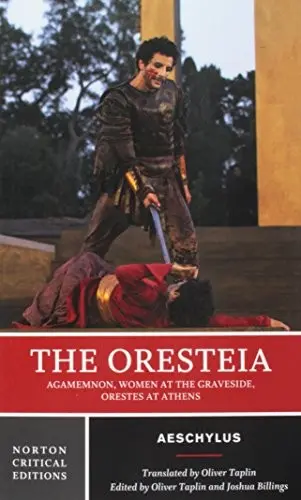
The Oresteia
The only surviving complete trilogy from ancient Greece. Aeschylus traces the curse on the House of Atreus from Agamemnon's murder through Orestes' revenge to the founding of Athenian justice. It's the Western world's first argument that law should replace blood vengeance.
Agamemnon front-loads the density: the chorus’s mythological asides and genealogical digressions lose readers fast when the edition skips footnotes, and one reader admits “I found my mind wandering continuously” before the first play even resolves. Libation Bearers and Eumenides only add characters and plot threads, and without a synopsis in hand, tracking who owes what to whom becomes its own project. “I often had to re-read passages several times,” another reader reports, and a third calls the choral odes “like obscure poetry they alluded me.” The trilogy’s treatment of women, especially the argument Apollo makes at the trial in Eumenides, reads as dated to modern readers rather than as the founding case for civic justice it claims to be. Coming to it without background on the myth cycle or Greek theatrical convention is a real barrier readers wish they had solved before starting, not after.
The case for it and the rest of the canon open with Pro.