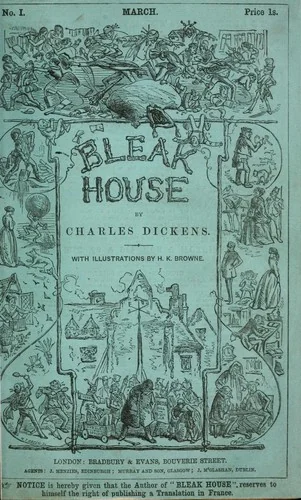
Bleak House
Decide its fate
The record
Time
An eveningA season815 pages, about 16 hours: the length of 2.5 typical books on the shelf.
Getting in
Walk right inSteep climbTwo readers report giving up or forcing concentration in the fog-filled opening chapters, whose first seven paragraphs stumped English majors in one study.
One of a kind
Others do thisNothing else doesThe Vince Review keeps Our Mutual Friend and Great Expectations above it on its list of Dickens favorites.
The case for it
on Chesney Wold
“The whole story strays from Bleak House and plunges into the foul fogs of Chancery and the autumn mists of Chesney Wold; but the whole story comes back to Bleak House. The domestic title is appropriate; it is a permanent address.”
G. K. Chesterton · Appreciations and Criticisms of the Works of Charles Dickens, 1911 on Mrs Guppy’s scene
“may be the funniest in Dickens’ entire oeuvre”
five stars · a book blog on Lady Dedlock and Tulkinghorn
“scenes in which Lady Dedlock and her lawyer Mr Tulkinghorn have conversations with huge stakes”
four stars · a book blog on the pace
“more fun than a mariachi band on a roller coaster”
five stars · a book blog
The case against
on the first chapter
“the entire first chapter is a description of some fog”
three stars · a book blog on the writing style
“Dickens’ writing can be very long-winded, descriptive and detailed, even in comparison”
a book blog on the length
“not the least of which is because it is so very long”
five stars · a book blog on the editing
“Could the novel have done with some editing?”
a book blog