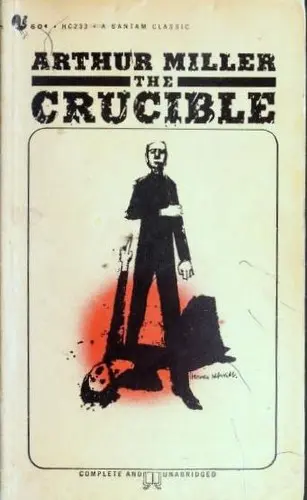
The Crucible
Salem, 1692. A group of girls claim to see the devil, and the town tears itself apart. Miller wrote it in 1953 as a direct allegory for McCarthyism, and he got called before HUAC for his trouble. The play outlived the politics: it gets revived whenever a society starts demanding loyalty oaths.
Act One stalls before the accusations start, with Miller pausing dialogue for paragraphs of backstory, and readers who take the play in cold, never staged or filmed, consistently rate the experience lower. The middle acts cycle through the same accusation logic without new information, and one reader summed up the frustration as “how do you declare yourself innocent of invisible crimes?” A large cast introduced fast leaves several readers still sorting out who's who by the final act. A more analytical critic argued “the crucible gets worse with context,” saying the historical parallel to McCarthyism is stated so explicitly it undercuts the courtroom tension even while granting the writing is well crafted. A dissenting reader went further, calling it flatly “one of the most overpraised literary works of the 20th Century.”
The case for it and the rest of the canon open with Pro.