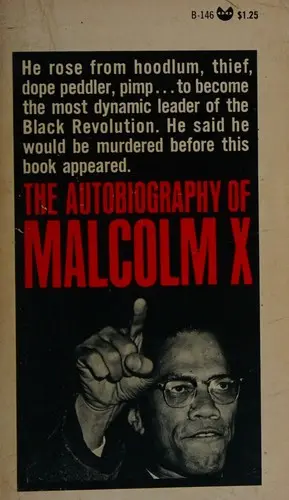
The Autobiography of Malcolm X
Told to Alex Haley over the last two years of Malcolm's life and published months after his assassination, this is the most important political memoir in American history. The arc runs from Detroit Red the hustler, to the Nation of Islam minister, to the man who breaks with Elijah Muhammad and goes to Mecca. It is the rare American conversion narrative that earns its turn.
The treatment of women is the flaw readers name most, showing up even inside admiring reviews as a real crack in the book’s moral clarity. Critics go further: one judges the book “suffered from a lack of critical analysis,” tracing the problem back to an old complaint that Malcolm wanted a chronicler rather than an interpreter, so contradictions in his own account go unexamined. Manning Marable’s later biography, the standard cross-check for engaged readers, found that Alex Haley quietly cut material without his co-author’s knowledge, a kind of “censorship of Malcolm X” that complicates the book’s reputation for candor, and argues the reworked ending “muddled the supposed clean break” between the hustling years and the man who emerged from Mecca. Some incidents attributed to associates, the biography adds, were Malcolm’s own.
The case for it and the rest of the canon open with Pro.