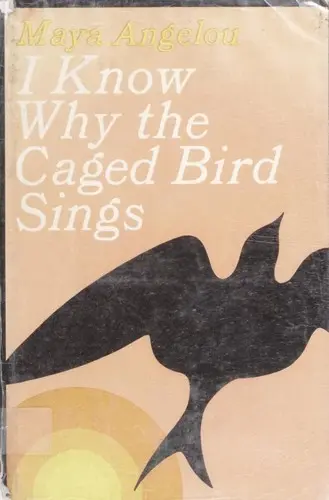
I Know Why the Caged Bird Sings
Angelou's account of childhood in the segregated South (trauma, racism, sexual violence, and the discovery of language as salvation) created a new form of Black American autobiography. It's been banned repeatedly, which tells you everything about its power.
The final third, Maya's teenage years in Los Angeles and San Francisco, reads thin against the dense, scene-by-scene Arkansas chapters that precede it; one reader says it simply “becomes compressed, rushed, and vague.” Another agrees the material is “spread rather thinly” for its length and wonders if a novelist's compression would have covered the same ground more efficiently. The episodic, non-chronological chapters work well alone but don't always build momentum, and one reader admits “the episodic nature of the book didn't work particularly well” for her. A few parents whose kids were assigned the book in ninth grade think the abuse material runs more explicit than a required-reading list needs, even while granting its value. At least one reader concedes she “just found it a chore at times.”
The case for it and the rest of the canon open with Pro.