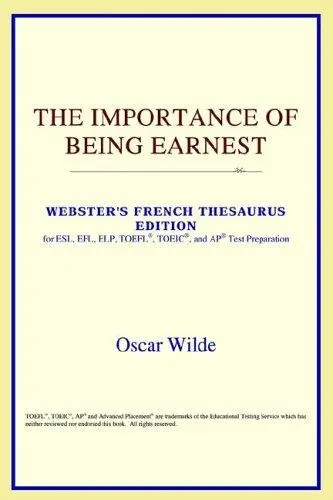
The Importance of Being Earnest
Two young men invent fictional alter egos to escape social obligations, and everything spirals into absurdity. Wilde called it a trivial comedy for serious people, and that's exactly right. Every line is polished to a lethal sheen. It premiered weeks before his arrest, which makes it read like the last party before the fall.
Strip away the wit and what is left is a plot that barely exists: one reviewer calls the whole thing a “somewhat phoned-in, consequenceless work,” funny in the moment and forgotten by morning. The craft objection goes deeper than plot. Readers complain that “every character speaks in the same voice,” all firing epigrams at the same fast clip, so individual personality dissolves under the uniform cleverness. Some find the nonstop joking wearing rather than sparkling: “the joking carried on a bit far,” one writes, saying it never lets up long enough to build real tension. A critic covering a revival puts the sharper version of the complaint bluntly: “finely-crafted and funny doesn't mean deep.” Read cold, without an actor's timing to carry the punch lines, several reviewers say the jokes simply do not land the same way.
The case for it and the rest of the canon open with Pro.